Caregiver Myths vs Facts: What Aspiring Home Care Pros Should Know
Thinking about a caregiver career? Separate the myths from the facts and find your path with RUKUN Home Care.
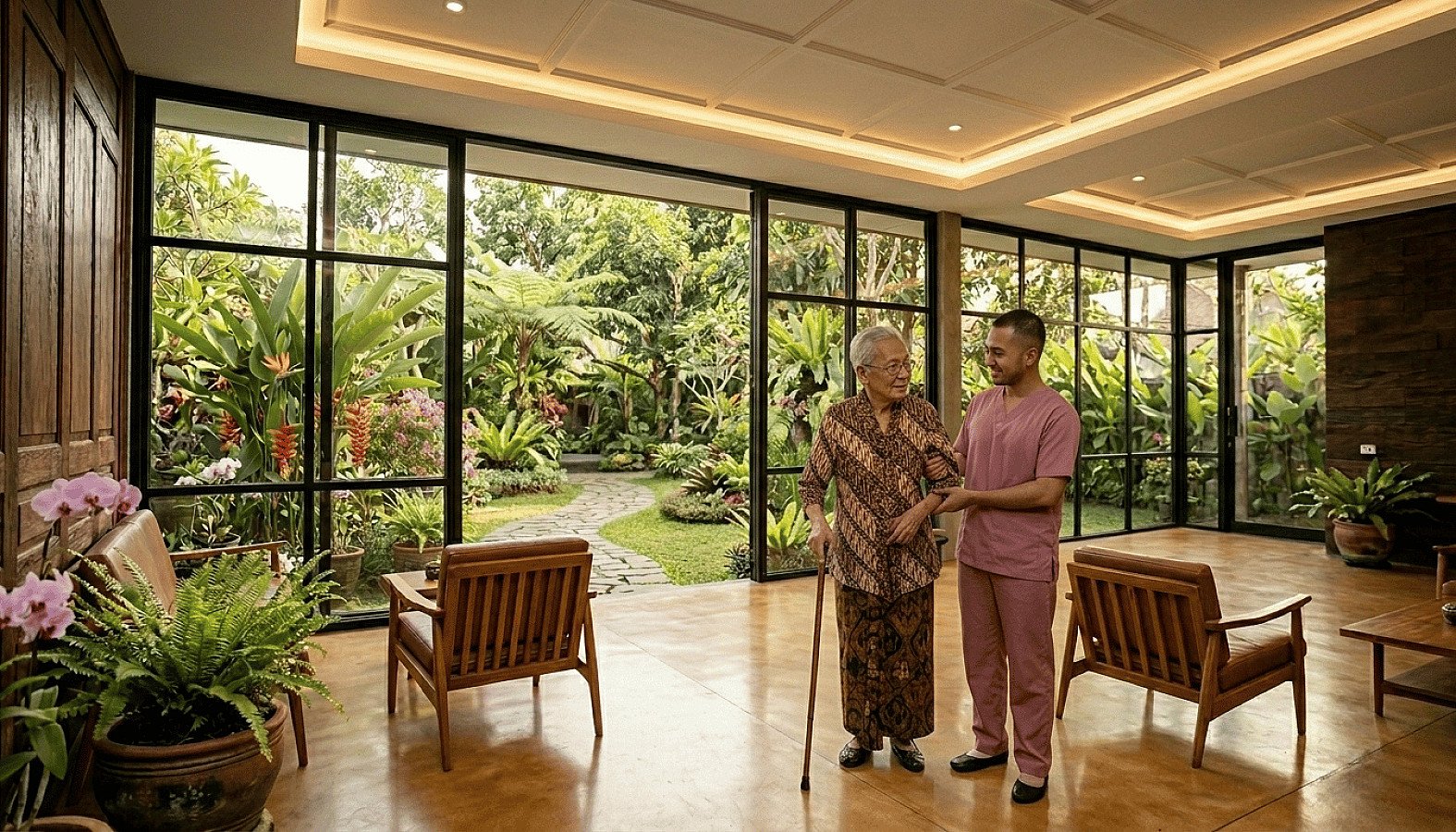
Caregiver attentively supporting an elderly client at home in Jakarta — senior care career guide by RUKUN Home Care
Many people are drawn to the idea of becoming a personal caregiver, only to talk themselves out of it based on things they have heard — not things they have seen. The truth is that working as a professional caregiver is a deliberate, skill-based career path that offers genuine growth, real impact, and a level of human connection few other jobs can match.
Is Caregiving Really Just a Last Resort for People Who Can't Find Other Work?
This is perhaps the most damaging misconception surrounding the profession. The idea that becoming a caregiver for the elderly is something people only do when no other door is open could not be further from the truth. Many of the most effective caregivers in Jakarta and across Jabodetabek chose this path deliberately — because they understood the value of what they were offering and wanted to make that contribution.
Families today are actively seeking skilled, trustworthy professionals to support their ageing parents at home. They are not looking for the cheapest available option; they are looking for someone they can rely on completely. That shift in expectation has elevated the standard — and the standing — of professional caregivers in Indonesia's home care landscape.
The Reality: Professional Caregivers Choose This Path with Purpose
Those who build lasting, fulfilling careers in this field share one thing in common: they came to it with genuine intention. Whether motivated by a personal experience caring for a family member, a desire to work closely with people, or a calling toward service — their motivation shapes the quality of care they deliver. That intrinsic drive is what separates a competent caregiver from an exceptional one.
Common Myths About the Caregiver Profession — and What the Facts Actually Show
Let us walk through the misconceptions that most often hold qualified candidates back, and address each one directly with what actually happens in professional practice.
Myth 1: Caregivers Are the Same as Domestic Helpers
This confusion is understandable on the surface — both roles involve working in someone's home. But the similarities end there. A professional caregiver's responsibilities are fundamentally different in nature, scope, and required competency.
- Caregivers focus on the health, safety, and quality of life of their elderly client — not on general household tasks.
- Core duties include monitoring vital signs, supporting safe mobility, managing medication schedules in accordance with a physician's instructions, and providing emotional companionship.
- Caregivers operate within a care plan developed alongside a Care Coordinator and, where necessary, medical teams from geriatric hospitals.
- Professional caregiver competencies can be formally certified through recognised bodies in Indonesia, distinguishing the role as a licensed professional function.
Families in Tangerang and Bekasi who engage home care services understand this distinction clearly. They are hiring someone with a specific skill set and a defined role — not a general household aide.
Myth 2: You Need a Medical Degree to Become a Caregiver
This is one of the most common barriers that stops otherwise qualified candidates from even applying. The facts tell a different story. A significant number of professional caregivers began their careers with no formal medical training whatsoever. What they had was empathy, discipline, and a genuine willingness to learn.
RUKUN Home Care provides a structured training programme that equips new candidates with everything they need before their first placement — from safe physical assistance techniques and communication strategies for clients with cognitive conditions, to how to coordinate effectively with families and report changes in a client's condition to the Care Coordinator. Always consult a licensed physician for any medical decisions relating to a client's care plan.
Candidates with a nursing or healthcare background will bring certain advantages, but the door is not closed to those coming from other fields — provided they meet the character and commitment criteria that matter most.
Myth 3: There Is No Future in This Profession
The opposite is true. Indonesia's elderly population is growing steadily, and this demographic shift is projected to continue for decades. Demand for home care services, trained senior companions, and professional live-in caregivers across the country is rising — while the supply of adequately trained caregivers remains limited.
This creates a genuine opportunity for those who enter the field now. Caregivers who build their reputation and competency today will be in a strong position as market demand continues to expand. In cities like Depok and Bogor, professional home care is still in an early growth phase — meaning the opportunity to build a long-term career here is very real.
Myth 4: Caregiving Is Exhausting Work That Goes Unappreciated
Like any role involving sustained human connection, caregiving has its demanding moments. But the characterisation of it as thankless and draining does not reflect the experience of most professional caregivers working within a structured, well-supported system.
- Families who entrust a caregiver with the care of their parent are almost universally grateful — and they express it in ways that are meaningful and lasting.
- The small moments matter deeply: an elderly client who can walk to the garden again after weeks of rehabilitation support, or one who lights up when their caregiver arrives in the morning.
- At RUKUN Home Care, Care Coordinators actively monitor caregiver wellbeing, manage workload distribution, and ensure that no caregiver is left to handle challenging situations alone.
Caregivers who work through a registered agency also benefit from clear job descriptions, fair scheduling, and professional protections that are harder to secure when working independently without any organisational structure.
What Does It Actually Take to Become a Good Caregiver?
Consider the example of a caregiver named Sari, who joined RUKUN Home Care after years of informally looking after her grandmother in Bogor. She had no certificates, no medical training — just patience, attentiveness, and a deep understanding of what it feels like to grow old and need support.
After completing her training and beginning her first placement in South Jakarta, Sari became one of the most requested caregivers on the team. Her strength was not clinical knowledge — it was her ability to be fully present, to notice subtle changes in her client's mood and condition, and to communicate those observations clearly to the family and Care Coordinator. For any health concerns, she always coordinated with the attending physician before taking any action.
The Qualities That Matter Most in Caregiver Selection
Here is a practical picture of what professional caregiver selection typically focuses on:
- Genuine empathy — the ability to sense and respond to a client's emotional state, not just their physical needs.
- Reliability and consistency — showing up on time, maintaining routines, and being dependable when circumstances are unpredictable.
- Clear communication — the ability to report a client's condition accurately and calmly to families and the Care Coordinator.
- Openness to learning — a willingness to receive training, accept feedback, and continue developing professionally.
- Emotional resilience — the capacity to stay grounded and composed in difficult moments, without losing compassion for the client.
If you recognise yourself in that list, you may already have the foundation this career requires. Find out more about the application process on our Join Us, or FAQ for prospective caregivers.
Next Steps
If this article has helped clarify what a career in caregiving actually looks like — and you feel ready to explore it seriously — we would like to hear from you. Visit the RUKUN Home Care to learn more about our values and standards, or go directly to our Join Us to register your interest. Our team will guide you through the process with transparency and care, every step of the way, across all of Jabodetabek.
This article is for educational purposes and is not a substitute for professional medical advice.
Not always. There are two common assignment models: live-in caregivers, who live in the client's residence for a specific period, and daily caregivers, who work on a scheduled basis. The choice of model depends on the client's needs and the family's agreement.
Of course. Most of RUKUN Home Care's clients are elderly Indonesians who are more comfortable communicating in Indonesian or even their local languages. English proficiency can be a plus for certain clients, but it's not a prerequisite for starting a career as a caregiver.
RUKUN Home Care accepts candidates of all ages as long as they meet the required physical and character qualifications. The selection process focuses on competency, motivation, and value alignment—not solely on the applicant's age.
Yes. RUKUN Home Care operates throughout the Greater Jakarta area, including Bogor, Depok, Tangerang, and Bekasi, in addition to Jakarta. Caregiver placement takes into account the candidate's domicile and mobility to ensure efficient and sustainable assignments.