Fire Safety for Seniors' Homes: A Complete Guide
A comprehensive guide to fire safety and emergency for seniors at home, including early detection and evacuation routes.
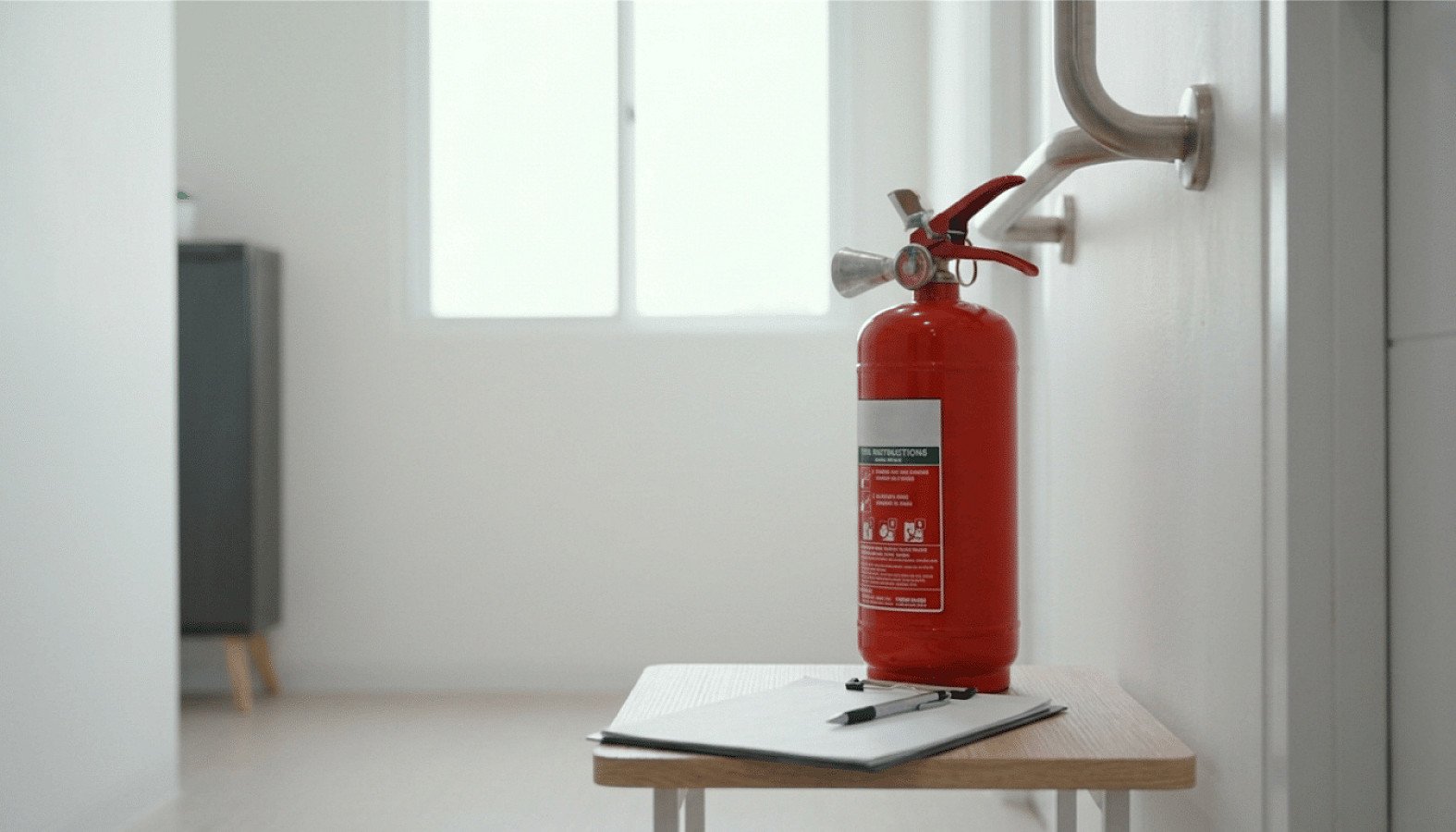
A red fire extinguisher and a clipboard on a small table in a hallway - RUKUN Home Care
Seniors are 2-3 times more likely to die from home fires than the general population, primarily due to limited mobility, slower reaction times, and difficulty hearing fire alarms. In Jakarta and Bekasi, many seniors' homes lack adequate fire detection systems or evacuation plans tailored to their physical limitations. Fires can spread very quickly, leaving an evacuation window of only 2-3 minutes from the time a fire is detected to the point of no life. Preparing your home with proper fire safety systems and practicing evacuation plans can save your parent's life and provide peace of mind for the entire family.
Why Are Seniors at Higher Risk in Fire Situations?
Understanding the factors that make seniors more vulnerable to fire hazards helps us design more effective prevention and response strategies. Fire is not only a physical threat but also poses cognitive and emotional challenges that can hamper seniors' responses in emergency situations.
Physical Limitations That Slow Evacuation
Reduced mobility significantly lengthens the time it takes seniors to escape a burning home. While a healthy adult can evacuate a home in 1-2 minutes, an older adult using a walker or wheelchair may need 5-10 minutes or more, time that is often lacking in a rapidly developing fire.
- Slow walking speed: Older adults walk 30-50% slower than younger adults on average, and this speed decreases even more dramatically in panic conditions or when there is heavy smoke that impairs visibility.
- Difficulty with stairs: Climbing or descending stairs in an emergency is particularly challenging for older adults with knee, hip, or balance problems. The risk of falling on stairs during an evacuation can be as dangerous as the fire itself.
- Dependence on mobility aids: Seniors who use walkers, canes, or wheelchairs require extra time to reach their aids and navigate doorways or corridors that may be narrow.
- Pre-existing respiratory conditions: Seniors with COPD, asthma, or cardiovascular conditions are particularly vulnerable to the effects of smoke and toxic gases, which can cause collapse even before the fire reaches them.
Sensory and Cognitive Impairment
The ability to detect fire in its early stages is crucial for a successful evacuation. Sensory impairment in seniors can delay the detection of fire, smoke, or the smell of burning until the fire is too large to control.
Hearing impairment prevents many seniors from hearing standard fire alarms, especially while sleeping or if they remove their hearing aids. A decreased sense of smell reduces the ability to detect gas or smoke before a fire starts. Cognitive impairments such as dementia or Alzheimer's can cause confusion in emergency situations, making it impossible for older adults to follow evacuation plans or even recognize existing dangers.
How to Install an Effective Fire Detection System?
A well-designed fire detection system provides crucial early warning for safe evacuation. For the elderly, standard systems are often insufficient and require special adjustments to ensure the alarm is audible and understood.
Smoke Detector Types and Placement
Smoke detectors are the most important and cost-effective fire safety device. Selecting the right type and strategic placement can provide sufficient warning time for a safe evacuation.
- Ionization vs. Photoelectric Smoke Detectors: Ionization detectors are more responsive to fast-moving, flaming fires, while photoelectric detectors are better at detecting smoldering, smoky fires. Ideally, use a combination of both or a dual-sensor model that combines both technologies for comprehensive protection.
- Placement in each bedroom: Install a smoke detector on the ceiling or upper wall (30 cm from the ceiling) in each bedroom where seniors sleep. This ensures they are awakened if a fire starts while they are asleep.
- Placement outside sleeping areas: Install detectors in hallways or areas outside bedrooms to provide additional warning if a fire starts in another area of the house.
- Placement on each floor: At least one detector on each floor of the house, including the basement if there is one. For multi-story homes, place an additional detector at the top of the stairs.
- Avoid inappropriate areas: Don't install detectors too close to the kitchen (at least 3 meters from the stove) to avoid false alarms from cooking fumes, or in the bathroom where steam can trigger the alarm.
- Interconnected smoke detectors: Use smoke detectors that are interconnected (wired or wireless) so that when one alarm sounds, all the alarms in the house sound. This is especially important for large or multi-story homes.
- Detectors with special features for seniors: Consider detectors with strobe lights (flashing) for seniors with hearing loss, or ones that can be connected to a vibration pillow system that vibrates to wake them.
Fire Alarms with the Right Frequency and Volume
Research shows that standard fire alarms with high-frequency tones (3000-4000 Hz) often fail to wake older adults because they lose their hearing at higher frequencies first. Alarms specifically designed for older adults use a different approach.
- Low-frequency alarms (520 Hz): Alarms with low-frequency tones have been shown to be more effective at waking older adults and children than standard high-frequency alarms. Some modern models offer both frequencies or adjustable frequencies.
- 85-decibel minimum volume: Ensure the alarm produces a sound of at least 85 decibels in the senior's bedroom. For seniors with significant hearing loss, consider a 90-95-decibel alarm or a system with additional components.
- Audible alarm vs. voice alarm: Some modern alarms use a voice message that says "Fire! Fire! Wake up!" which has been shown to be more effective in waking people and motivating quick evacuation than a simple beep.
- Alarm systems with professional monitoring: Consider an alarm system connected to a security monitoring center that can automatically call the fire department if the alarm sounds and there is no response from the home's occupants.
Routine Maintenance and Testing
Smoke detectors are only effective if they are functioning properly. Regular maintenance is key to ensuring the detection system works when needed.
- Monthly testing: Press the test button on each smoke detector monthly to ensure the alarm sounds loudly and clearly. If the alarm is weak or doesn't sound, replace the battery or unit immediately.
- Replace the battery once a year: Even if the detector still sounds during testing, replace the battery every year or when the alarm "chirps" indicating a low battery. Choose a memorable date, such as a birthday or New Year's.
- Clean the detector every 6 months: Use a vacuum cleaner with a soft brush attachment to remove dust and cobwebs from the detector that could interfere with the sensor.
- Replace the unit every 10 years: Smoke detectors have a maximum lifespan of 10 years. Check the manufacturing date on the back of the unit and replace it if it's past 10 years, even if it still appears to be working.
- Maintenance documentation: Record all maintenance activities in a logbook, including test dates, battery changes, and unit replacements, to ensure nothing is missed.
What are the Fire Prevention Steps in High-Risk Areas?
Preventing a fire before it starts is much more effective than having to extinguish or evacuate it. Most home fires in seniors can be prevented by addressing common causes in high-risk areas such as the kitchen, living room, and bedrooms.
Kitchen and Cooking Safety
The kitchen is the most common source of home fires, especially in seniors who may forget to turn off the stove or fall asleep while cooking. Simple modifications can dramatically reduce this risk.
- Use a stove with an automatic shut-off feature: Modern stoves with automatic timers or sensors that turn off the stove if no movement is detected for a certain period are helpful for forgetful seniors.
- Install a stove-specific alarm: A device that sits above the stove and sounds if the temperature gets too high or there is excessive smoke provides an early warning before a fire starts.
- Remove flammable materials: Keep towels, napkins, plastic packaging, and other flammable materials at least 50 cm away from the stove. Wear long oven mitts and avoid clothing with wide sleeves while cooking.
- Don't leave the stove unattended: Stay in the kitchen when frying, baking, or cooking over high heat. If you must leave the kitchen, turn off the stove first.
- Regularly clean grease and oil: Grease buildup on the stovetop, in the oven, or in the exhaust hood is a significant fire hazard. Clean cooking surfaces after each use and perform a monthly deep cleaning.
- Keep a fire extinguisher near the kitchen exit: Place an ABC type fire extinguisher (effective on wood, grease, and electric fires) in an easily accessible location but not so close to the stove that it can still be accessed in the event of a fire.
- Consider safer cooking alternatives: Microwaves, rice cookers, slow cookers, and air fryers are safer alternatives to gas or electric stoves due to their lower fire risk.
Electrical and Electronic Safety
Electrical problems are the second most common cause of home fires. Old electrical installations and improper use of electronic equipment increase the risk, especially in older homes in Jakarta and Tangerang.
- Check for damaged or frayed cords: Replace all frayed, cracked, or worn electrical cords immediately. Damaged cords can cause short circuits and start a fire.
- Avoid overloading electrical outlets: Don't plug too many devices into a single outlet or strip. Use a power strip with a surge protector and circuit breaker for added protection.
- Replace aging electrical installations: Homes that are more than 20-30 years old may have electrical systems inadequate for modern electrical loads. Consider having them upgraded by a licensed electrician.
- Turn off appliances when not in use: Unplug chargers, irons, hair dryers, and other small electronic appliances from the wall when not in use. Appliances that remain plugged in can malfunction and cause fires.
- Use bulbs with the correct wattage: Do not use bulbs with a higher wattage than recommended for the light fixture, as excessive heat can damage the socket and cause a fire.
- Check electric blankets and heating pads: Do not use electric blankets or heating pads that are old, damaged, or have frayed cords. Always turn them off before bed and never fall asleep while using them.
- Functioning ELCBs and MCBs: Ensure your home is equipped with a functioning Earth Leakage Circuit Breaker (ELCB) and Miniature Circuit Breaker (MCB) to automatically cut off the power if there is a problem.
Bedroom Safety and Smoking Habits
Bedroom fires are particularly deadly because they often occur while people are asleep and unable to respond quickly. Smoking in bed is a leading cause of fire deaths in older adults.
- Prohibit smoking in bed or on the couch: If older adults smoke, ensure they never smoke while drowsy, in bed, or on the couch. Provide a large, stable ashtray and dampen cigarette butts before discarding.
- Keep matches and lighters away: If older adults have dementia or cognitive impairment, keep matches and lighters safely out of their reach to prevent accidental ignition.
- Use flame-retardant bedding and blankets: Consider using flame-retardant-treated textiles, especially for older adults who smoke or use electrical appliances in bed.
- Avoid candles and wax: Do not use candles or incense in older adults' bedrooms. If needed for relaxation or spiritual purposes, use battery-operated LED candles, which provide a visual effect without the risk of fire.
- Administer oxygen therapy safely: If the elderly person uses an oxygen concentrator or oxygen cylinder, ensure there are no sources of flame or heat within a 3-meter radius. Oxygen accelerates combustion and makes fire much more dangerous.
How to Create and Practice an Emergency Evacuation Plan?
A well-designed and regularly practiced evacuation plan can save lives in a fire. For seniors, the plan should consider mobility limitations and ensure all household members, including caregivers, understand their roles.
Essential Elements of an Evacuation Plan
An effective evacuation plan includes more than just knowing where the exits are. The plan must be tailored to the senior's specific abilities and the circumstances of their home.
- Two exits from each room: Identify the main door and an alternate route (window or other door) from each room. Ensure the alternate route can be used by seniors with mobility limitations.
- Easy-to-open windows: Check all windows serving as escape routes to ensure they can be easily opened from the inside. Remove complicated locks or safety devices and replace them with simpler ones.
- Emergency stairs for upstairs: If the elderly person's bedroom is upstairs, consider a portable emergency stairs or evacuation system specifically designed for elderly people with limited mobility. Practice using it before an emergency occurs.
- Determine a safe assembly point: Choose a clear and safe location outside the home where everyone will gather after the evacuation—for example, under a large tree in front of the house or at a neighbor's house. The assembly point should be far enough from the house (at least 15 meters) but accessible to the elderly person.
- Assign a buddy system: If other family members or caregivers live in the same house, determine who will be responsible for assisting the elderly person with the evacuation. If the elderly person lives alone, coordinate with nearby neighbors.
- Plan for pets: If you have pets, determine who will take them and where their kennels or leashes are located for quick evacuation.
- Emergency numbers that are easily accessible: Post the fire department number (911) and other emergency numbers near every phone and store them on your smartphone for quick access.
Evacuation Drills and Mental Preparation
Knowledge of the evacuation plan isn't enough—regular practice builds muscle memory and reduces panic in a real emergency. For older adults, drills also help identify obstacles that may not be apparent in a paper plan.
- Evacuation drills at least twice a year: Conduct a complete fire drill at least twice a year, ideally during the day and at night to simulate different conditions. Record the time required for a full evacuation.
- Darkness drills: Fires often cause power outages. Practice evacuating in the dark using flashlights or emergency lighting to familiarize seniors with evacuation routes without relying on headlights.
- Practice "crawl low under smoke": Teach seniors to crawl low under smoke whenever possible, as cleaner air is closer to the floor. If crawling is not possible due to mobility issues, focus on a quick evacuation by whatever means they can.
- Practice "stop, drop, and roll": Practice basic techniques for catching fire—stop, drop to the floor, and roll to extinguish the flames. Demonstrate the movements even if you are not practicing with a real fire.
- Do not return to a burning house: Emphasize strongly that no possessions or pets are valuable enough to risk their lives by returning to a burning house. Professional firefighters will handle the rescue.
- Evaluation and improvement after the drill: After each drill, discuss what went well and what needs improvement. Adjust the plan based on any obstacles encountered during the drill.
Next Steps: Improve Your Parent's Home Fire Safety
Fire safety isn't just about having the right tools, but also about preparedness, awareness, and consistent practice. Start with a thorough assessment of your parent's home today—check smoke detectors, identify fire hazards, and create a realistic evacuation plan. Every step you take to improve fire safety reduces the risk of a tragedy that can change lives in an instant.
If you need professional caregiver, our team at RUKUN Home Care is ready to help. Our caregivers can provide support to ensure your parent's safety every day. Visit assessment for a free consultation or contact us via WhatsApp for more information.
Disclaimer: This article is educational and provides general guidance on fire safety for seniors at home. Fire safety regulations may vary by location and building type. For professional fire safety system installation, consult a licensed fire safety professional or your local fire department. For electrical modifications or complex safety equipment installations, use the services of a licensed technician to ensure compliance with safety standards. Evacuation plans should be tailored to each senior's specific abilities and the circumstances of their home. For further guidance on fire safety or professional caregiver services trained in emergency safety protocols, visit FAQ or contact the RUKUN Home Care team for a personal consultation.
The minimum number of smoke detectors for elderly homes is one inside every bedroom, one outside sleeping areas on each floor, and one on every floor including basement. For one-story house with two bedrooms, this means at least 3-4 detectors. For two-story house with three bedrooms, at least 6-7 detectors. However, more detectors provide better protection—consider adding in living room, kitchen (at least 3 meters from stove), and other areas where family spends much time. Use interconnected smoke detectors so when one sounds, all sound throughout house. For elderly with hearing impairment, add detectors with strobe lights or vibration systems. Install detectors on ceiling or upper wall (within 30 cm from ceiling) and avoid room corners where poor air circulation can delay smoke detection.
Hearing impairment in elderly is serious problem for fire safety because standard alarms may not wake them. Solution is using special alarm systems designed for people with hearing impairment. Low-frequency alarms (520 Hz) are more effective at waking elderly compared to standard high-frequency alarms (3000-4000 Hz). Consider multi-sensory alarm systems that combine loud sound (90-95 decibels), very bright strobe lights that flash rapidly, and vibration devices like vibrating pillows or shakers placed under mattress. Some modern systems connect with family smartphones and professional monitoring centers that can send alerts and call fire department automatically if no response. If using hearing aids, ensure elderly wear them all the time or keep in very easy-to-reach place beside bed. For elderly living alone, consider medical alert systems with integrated fire detection.
Yes, elderly with limited mobility living in multi-story homes need special evacuation solutions because stairs are significant barriers in emergencies. Several options available depending on mobility level and budget. For elderly who can walk but slowly or unstably, consider portable emergency ladders that can be stored near bedroom windows. For elderly with wheelchairs or severe mobility limitations, evacuation chairs or sleds specifically designed to allow them to be lowered through stairs with help from one or two people is wise investment. Some modern models can even be operated by one person with brake systems and speed control. Another alternative is moving elderly bedroom to ground floor if possible, which eliminates need for stair evacuation entirely. If no evacuation solution is feasible, consider safe room—room with fire-resistant door and outside communication where elderly can shelter and wait for rescue by fire department. Train use of whatever evacuation equipment chosen regularly so everyone helping evacuation is familiar with operation.
Fire extinguishers (APAR) are important protection but only effective if stored correctly and users know how to use them. Store ABC-type APAR (effective for wood, oil, and electrical fires) in strategic locations like in kitchen near exit door (not too close to stove), in garage, and near entrance of each floor. APAR should be hung on wall at easily reachable height (120-150 cm from floor) with clear signs. For elderly with limited hand strength, choose APAR with 1-2 kg size that is lighter and easier to operate. Train PASS technique (Pull, Aim, Squeeze, Sweep): pull safety pin, aim nozzle at fire base, press lever, and sweep side to side. Important to emphasize APAR is only for small and contained fires—if fire is larger than trash bin, evacuate immediately and call fire department. Check APAR monthly to ensure pressure gauge is in green zone and no visible damage. Professional service annually and replace after use or after expiration (usually 5-10 years depending on type).
Although residential sprinkler systems are not mandated by Indonesian regulations for residential homes, such systems are very effective safety investments especially for elderly with limited mobility who may not evacuate quickly. Automatic sprinklers can control or even extinguish fires in early stages, providing much longer evacuation time and often preventing uncontrolled fire spread. Modern residential sprinkler systems are specifically designed for homes with lower water pressure and more aesthetic sprinkler heads compared to commercial systems. Installation costs vary depending on house size but typically range Rp 50-150 million for standard homes, with minimal annual maintenance. For homes being renovated or newly built, additional cost for sprinklers is relatively small. More economical alternative is standalone sprinkler heads that can be installed in high-risk areas like above stove or in bedroom without requiring complete pipe system. Consider sprinklers especially if elderly live alone, have conditions making quick evacuation difficult, or house has flammable materials.