Caregiver vs Nurse: Which Senior Care Career Is Right for You?
Understand the real difference between a caregiver and a nurse before choosing your path in senior care.
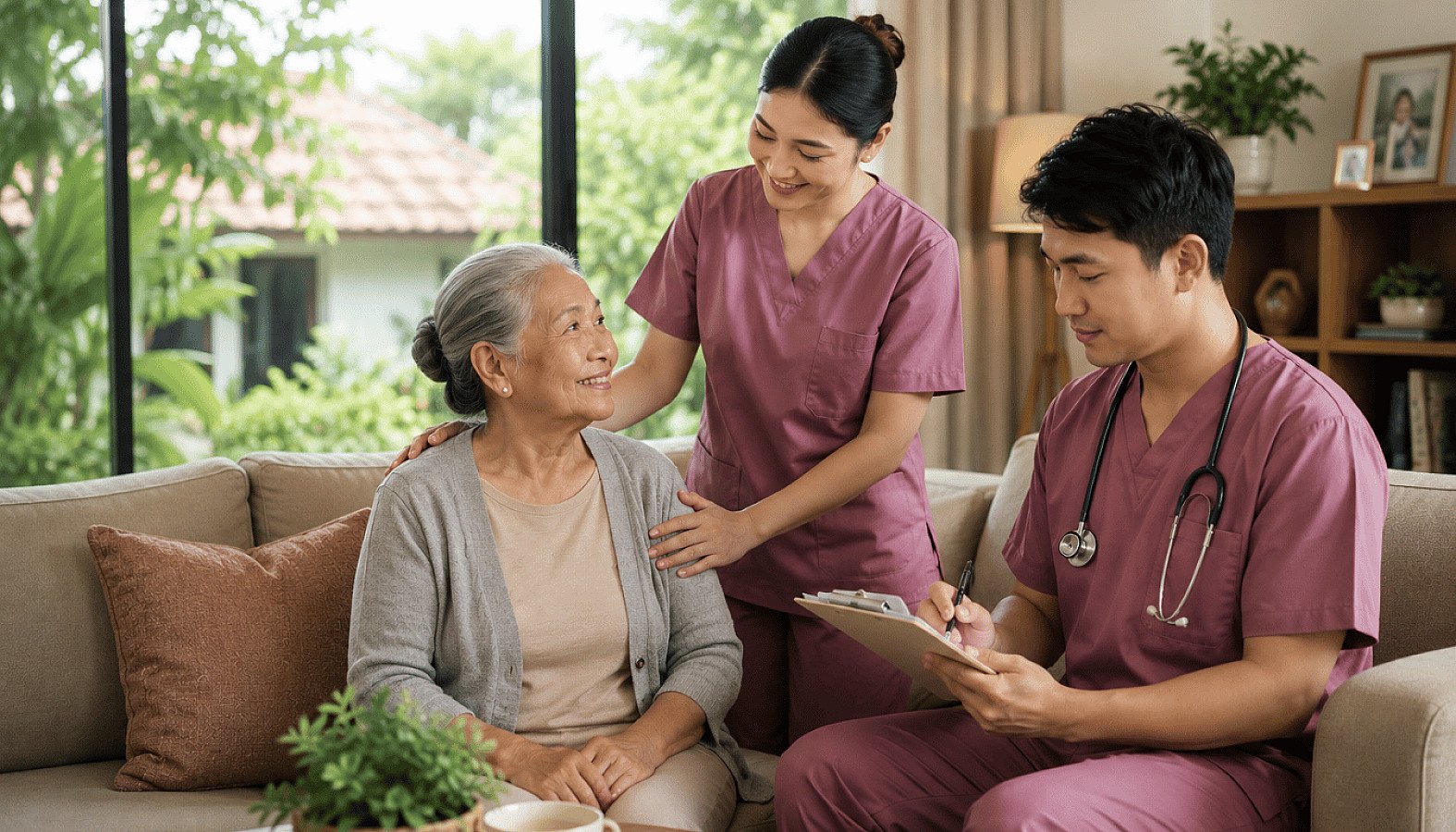
Caregiver and nurse supporting an elderly client at home — RUKUN Home Care senior care careers
One of the most common questions we hear from prospective candidates is a straightforward one: "What is the difference between being a caregiver and being a nurse?" It is a fair question — both roles exist within the world of human care, and the lines can seem blurry from the outside. Understanding where those lines actually fall, however, can be the clearest map you have toward choosing the career path that truly fits who you are.
What Is the Fundamental Difference Between a Caregiver and a Nurse?
The clearest way to understand this distinction is to look at what each role is actually licensed — and expected — to do. A nurse is a clinically trained medical professional who holds a formal licence to perform healthcare interventions: administering intravenous medication, managing complex wound care, carrying out doctor-prescribed procedures, and documenting clinical assessments within a regulated medical framework.
A caregiver's role sits in a different but equally important space. Rather than performing clinical acts, a caregiver supports the client in living each day with safety, dignity, and as much independence as possible. The focus is on quality of life — ensuring the client eats well, moves safely, stays socially engaged, and feels genuinely seen and valued as a person.
Two Roles That Complete Each Other
It is important to understand that caregivers and nurses are not in competition — they are partners within a broader care structure. In many home care arrangements, particularly in Jakarta and Tangerang, both professionals are present: the nurse addresses specific medical needs as directed by a physician, while the caregiver ensures the client's daily routine remains consistent, comfortable, and humane.
At RUKUN Home Care, caregivers work alongside Care Coordinators and, where relevant, coordinate with medical teams from geriatric hospitals or the client's own doctor. For any decision that is medical in nature, the attending physician should always be consulted first.
How Do the Education and Certification Paths Compare?
One of the most practically significant differences between these two professions lies in how you qualify for each. Understanding this comparison can help you make a realistic and informed decision — taking into account your current circumstances, timeline, and goals.
The Path to Becoming a Nurse
To practise as a licensed nurse in Indonesia, a candidate must complete a minimum of three to four years of formal education in a Diploma III Nursing programme or a Bachelor of Nursing degree (S.Kep). Upon graduation, they must pass a national competency examination and register with the relevant health authority to obtain a Surat Tanda Registrasi (STR) — a licence that must be renewed periodically. Practising nursing without a valid STR is not legally permitted.
- Formal education: 3–4 years of accredited academic study
- National competency examination required before practice
- STR licence mandatory and subject to periodic renewal
- Bound by the Indonesian nursing profession's code of ethics and regulatory framework
The Path to Becoming a Professional Caregiver
The caregiver pathway is structured differently — and is considerably more accessible as an entry point for people who want to build a meaningful career in elder care without a multi-year academic commitment. A formal degree is not a prerequisite. What is required is structured training, recognised competency certification, and — above all — the right character and commitment.
- Structured pre-placement training covering both technical skills and interpersonal competencies
- Caregiver certification from a recognised institution can be completed in a relatively short time
- No STR nursing licence required — caregivers operate within a clearly defined scope that sits outside clinical medical acts
- Competency continues to develop through hands-on experience and advanced training modules
For someone who wants to enter the field of senior care now — without the time and financial investment of a full degree — the caregiver profession offers a clear, legitimate, and professionally respected path. RUKUN Home Care provides an internal training programme designed to bring candidates from diverse backgrounds up to professional standard before any client placement.
What Does a Caregiver Do That a Nurse Does Not — and Vice Versa?
Consider the example of Ibu Ratna, an 80-year-old woman living in her family home in Depok. She has a mild cardiac condition managed under a doctor's supervision, and her mobility has become limited over the past year. Her family arranges for two types of professional support to enter her life.
A nurse from a partner clinic visits twice a week to conduct clinical assessments, monitor her cardiac indicators, and update her medical record in line with her doctor's instructions. A caregiver from RUKUN Home Care is present daily — helping Ibu Ratna begin each morning comfortably, accompanying her through gentle exercises, ensuring she follows her dietary guidelines, and simply being there when she wants to talk about her grandchildren. For any change in her medical condition, the caregiver coordinates immediately with the Care Coordinator and the attending physician.
A Practical Side-by-Side Comparison
Here is a concrete breakdown of how the two roles differ in day-to-day practice within a senior care context:
- Clinical medical acts — performed exclusively by licensed nurses following doctor's orders; caregivers do not carry out these acts independently.
- Daily living assistance (meals, personal hygiene, mobility support) — the primary domain of the caregiver; nurses are generally not involved in this dimension.
- Ongoing observation and reporting of the client's general condition — caregivers do this every day and relay findings to the Care Coordinator and family.
- Social and emotional companionship — the caregiver is the constant presence who builds a sustained, trust-based relationship with the client over time.
- Cross-party coordination — caregivers serve as an active bridge between the client, their family, and the medical team including nurses and physicians.
This picture makes clear that being a caregiver does not mean doing less than a nurse — it means doing something different that is equally essential to the overall wellbeing of the client.
Why the Caregiver's Position Is Uniquely Irreplaceable
Because caregivers are present every day — sometimes around the clock in a live-in arrangement — they develop a depth of understanding about their client that no scheduled clinical visit can replicate. They notice when a client's appetite starts to drop before it becomes a medical concern. They know which topics lift the client's mood and which routines help them sleep. They can tell when something feels different, even before it is clearly visible.
This contextual knowledge is not a soft skill — it is a professional asset of real value. Families in Bekasi and Bogor who use home care services frequently describe their caregivers as people their elderly parent has come to genuinely trust. That trust takes time and consistency to build, and it is something only the caregiver — not the nurse, not the doctor — is positioned to provide.
To learn more about how our caregivers work and what the role involves day to day, visit our FAQ">frequently asked questions page or explore the full range of services on the RUKUN Home Care">RUKUN Home Care homepage.
Next Steps
If understanding the difference between a caregiver and a nurse has helped you see where your strengths and interests are best placed, we would like to support the next step in your journey. Visit the Join Us to register your interest in a caregiver role with RUKUN Home Care, or explore our RUKUN Home Care to learn more about the values, standards, and mission that define how we work. Our team is ready to guide you through the process across all of Jabodetabek.
This article is for educational purposes and is not a substitute for professional medical advice.
Caregivers can help remind and assist clients in taking prescribed medications. However, caregivers are not permitted to administer, change dosages, or recommend medications independently. All decisions regarding medication should always be consulted with the treating physician and coordinated through the Care Coordinator.
Of course, it's possible, and many do. Licensed nurses who transition to the caregiver profession bring significant advantages in clinical understanding and medical observation skills. However, a perspective adjustment is needed: the caregiver role places greater emphasis on long-term support, deep interpersonal relationships, and the client's holistic quality of life.
Yes. Caregivers who perform clinical medical procedures without a valid nursing license may face legal consequences in Indonesia. RUKUN Home Care ensures that each caregiver understands the precise scope of their duties before placement and provides clear guidance through the Care Coordinator for situations requiring medical attention.
Yes, and this collaboration is a vital part of the RUKUN Home Care service model. When clients also receive visits from nurses or other medical personnel, caregivers act as a liaison—relaying daily observations to the medical team and ensuring the doctor's or nurse's recommendations are properly implemented in the client's daily life.