Anti-Fall Home Modifications for the Elderly: A Complete Guide
A complete guide to make your home safe for seniors, with tips for preventing falls while still being senior-friendly.
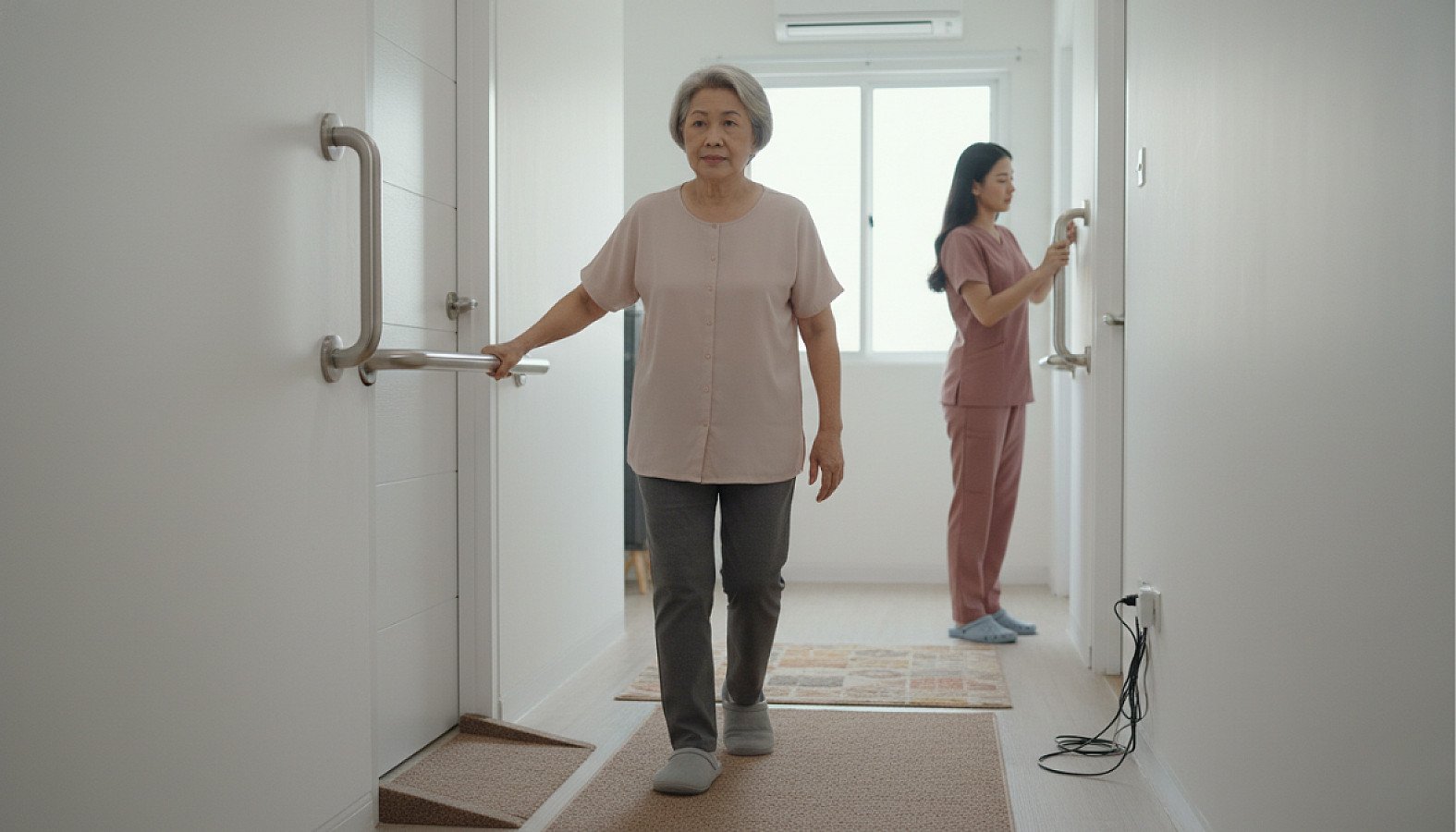
An elderly woman uses a hallway grab bar while a caregiver stands nearby in a modified home - RUKUN Home Care
Falls are a leading cause of serious injury in older adults, with one in three people over 65 experiencing a fall each year. In homes in Jakarta and Bogor, many older adults live in environments not designed for their declining mobility needs, with steep stairs, slippery floors, and poor lighting. The consequences of falls include not only physical injuries such as hip fractures or head trauma, but also a loss of self-confidence that makes older adults afraid to move and increasingly inactive. Properly modifying your home can reduce the risk of falls by up to 80% and enable your parent to live a more independent and safe life in their own home.
Why Are Seniors More Vulnerable to Falls in Their Own Homes?
Understanding the risk factors that make seniors susceptible to falls helps us identify priority areas for modification. Falls in seniors are rarely caused by a single factor, but rather by a combination of aging-related physical changes and an unsupportive home environment.
Physical Changes That Increase Fall Risk
The natural aging process brings changes to body systems that affect balance, strength, and the ability to react to hazards. These changes often occur so gradually that seniors and their families are unaware of the increased risk until a fall actually occurs.
- Decreased muscle strength and bone mass: Sarcopenia (loss of muscle mass) and osteoporosis make seniors weaker and their bones more fragile. Weak leg muscles make it difficult to support body weight, especially when standing from a sitting position or climbing stairs.
- Impaired balance and proprioception: The ability to sense body position in space (proprioception) decreases, making it difficult for older adults to adjust their posture quickly when they lose their balance.
- Vision problems: Cataracts, glaucoma, macular degeneration, and decreased night vision make it difficult for older adults to see obstacles, differences in height, or slippery surfaces.
- Medication side effects: Blood pressure medications, sleeping pills, antidepressants, and diabetes medications can cause dizziness, drowsiness, or orthostatic hypotension, which increases the risk of falls.
- Neurological conditions: Parkinson's disease, stroke, diabetic neuropathy, and dementia affect coordination, walking speed, and the ability to assess danger.
- Cardiovascular disorders: Cardiac arrhythmias, hypotension, or Syncope (sudden fainting) can cause a momentary loss of consciousness that can lead to a fall.
Hidden Dangers in the Home
A home that is safe for young adults can be a dangerous place for older adults with physical limitations. These hazards are often overlooked because they are part of the familiar, everyday environment.
Areas with the highest risk include bathrooms with wet and slippery floors, stairs without a sturdy handrail, bedrooms with long distances to the toilet, and kitchens with hard-to-reach appliances. Even seemingly simple rugs can become tripping hazards if the edges are bent or not properly attached.
What Are the Priority Modifications for Each Room?
A room-by-room approach ensures that no area is overlooked in the safety evaluation. Each room has specific hazards that require solutions tailored to its function and use.
Bathrooms: The Highest Risk Area
Bathrooms are the most common location for falls in older adults due to the combination of wet surfaces, movements requiring balance, and limited space. Bathroom renovations should be a top priority in any home safety plan.
- Install grab bars: Install horizontal grab bars near the toilet (75-85 cm above the floor) and inside the shower or bathtub. Grab bars should be attached to structural walls, not just tile, and should be able to support a minimum weight of 100 kg.
- Use non-slip mats: Place a rubber mat with drainage holes inside the shower and a rubber mat with strong suction outside the wet area. Replace immediately if suction power begins to decrease.
- Install a shower chair: A shower chair or shower bench at an appropriate height (45-50 cm) allows seniors to sit while showering, reducing the risk of falls due to fatigue or dizziness.
- Raised toilet seat: A toilet seat raised 10-15 cm makes it easier for seniors with knee or hip problems to sit and stand without excessive assistance.
- Hand-held shower: A portable shower makes it easier to clean without having to stand or twist in an unstable position.
- Bright, waterproof lighting: Ensure bathroom lighting is at least 300 lux with moisture-resistant LED lights. Add a night light near the toilet for nighttime visits.
- Outward-opening doors: If possible, change the door opening direction to open outward so that if an elderly person falls in the bathroom, the door can still be opened from the outside for rescue.
Stairs and Corridors: Primary Movement Paths
Stairs are a significant fall hazard, especially for older adults with vision or balance issues. Dark or narrow hallways also pose a risk, especially at night when older adults get up to use the bathroom.
- Install handrails on both sides of stairs: Handrails should be sturdy, round (3-4 cm in diameter for a comfortable grip), and extend past the first and last steps. The ideal handrail height is 85-90 cm from the surface of the stairs.
- Add visual contrast to the stair edge: Use contrasting-colored anti-slip tape (yellow or white) on the edge of each step to help seniors with low vision see the edge of each step.
- Optimal stair lighting: Install lights at the top and bottom of the stairs, and consider motion-sensing lights that turn on automatically when someone approaches the stairs.
- Remove loose carpeting: If carpeting is used on stairs, ensure it is securely attached using grippers or special adhesive. Even a slight shift in carpet is extremely dangerous.
- Consider a stairlift: For seniors with very limited mobility, a stairlift (an electric chair that moves up stairs) is a safe investment for multi-story homes.
- Wide, barrier-free corridors: Ensure corridors are at least 90 cm wide for ample space, especially if the senior uses a walker or wheelchair. Remove furniture, decorations, or anything that narrows the path.
Bedroom: A Safe Rest Zone
The bedroom is where seniors spend a significant amount of time and is often the starting point for risky nighttime trips to the bathroom. Bedroom modifications focus on ease of access and preventing falls upon waking.
- Proper bed height: The bed should be at a height that allows the senior to sit with their feet fully touching the floor (usually 45-55 cm off the floor). A bed that is too high or too low makes safe transfers difficult.
- Strategic nightlights: Install nightlights with light sensors that automatically turn on when dark along the path from the bed to the bathroom. The lights should be bright enough to see the path but not too bright.
- Easily accessible light switches: Install light switches next to the bed or use lamps with remote controls so the elderly person doesn't have to walk in the dark looking for the switch.
- Remove obstructive furniture: Ensure the path from the bed to the door and bathroom is clear. Avoid placing electrical cords, small rugs, or items on the floor that could cause tripping.
- Emergency telephone or button next to the bed: Place a telephone or emergency call system within easy reach to call for help in case of a fall or other emergency.
How Can You Improve Lighting and Visibility?
Poor lighting is one of the easiest fall risk factors to fix, but it's often overlooked. Older adults need 2-3 times more light than younger adults to see clearly, especially to detect changes in height and obstacles.
Lighting Strategies for Every Area
Effective lighting includes a combination of general lighting, task lighting, and accent lighting to create a bright environment without distracting glare. Particular attention should be paid to transition areas such as entryways and stairwells where changes in light levels can cause temporary disorientation.
- Increase wattage or add lights: Ensure each room has a minimum of 300 lux (equivalent to 3-4 12-watt LED bulbs for a 3x3 meter room). Workspaces and kitchens require 500 lux or more. Use full-spectrum LED lights: LED lights with a color temperature of 4000-5000K (daylight) provide clear lighting and help seniors see details better than warm, yellow lights. Eliminate shadow areas: Add lights in dark corners, under kitchen cabinets, and inside cupboards to eliminate shadow areas that can hide hazards. ... Sensors must be sensitive enough to detect slow movements in older adults.
- Easily accessible and visible switches: Install large light switches with clear color contrast at an easily accessible height (110-120 cm). Consider glow-in-the-dark switches for easy locating.
- Exterior lighting: Ensure entryways, front steps, and parking areas are adequately lit with motion sensors or automatic timers that activate at dusk.
Visual Contrast and Hazard Markers
Color contrast helps older adults with reduced vision identify boundaries between different surfaces and recognize changes in height. This is crucial for preventing missteps and trips.
- Wall and floor contrast: Use different colors for walls and floors to create a clear boundary between the two. Avoid intricate floor patterns that can create optical illusions.
- Mark stair edges: Apply contrasting-colored (yellow or white) anti-slip tape to the edge of each stair step to help seniors see where they should step.
- Contrasting doors and frames: Paint doors and frames a different color than the walls for easy identification, especially important for bathroom doors at night.
- Contrasting furniture: Choose furniture that is a different color than the floor and walls for easy visibility and to prevent bumping or tripping.
What Role Do Assistive Devices and Technology Play in Home Safety?
Modern technology and mobility aids can significantly improve the safety and independence of older adults at home. Investing in the right equipment pays dividends in the form of preventing costly injuries and loss of independence.
Mobility and Support Equipment
Mobility aids provide the additional support older adults need to move safely around the home. Selecting the right device depends on each individual's mobility level and specific support needs.
- Walker or rollator: Walkers with wheels (rollators) are easier to use indoors than standard walkers, especially on smooth surfaces. Choose a model with easy-to-operate brakes and a seat for rest.
- Wide-base canes: Quad canes provide better stability than single-point canes, especially for seniors with poor balance.
- Bathroom transfer benches: Benches that extend from the outside to the inside of the shower allow seniors to sit first outside the wet area, then slide safely inside. /li>
- Bed rails: Bedside rails help seniors rise from a lying position to a sitting position more safely and independently.
- Reachers or grabbers: Long-handled grabbers reduce the need to bend or reach upward, both of which can cause loss of balance.
Monitoring and Emergency Alert Systems
Monitoring technology provides peace of mind for families who do not live with their seniors. This system allows for a quick response in the event of a fall or other emergency, especially important for seniors living alone in Jakarta or Depok.
- Medical alert systems: Devices such as bracelets or necklaces with an SOS button that can be pressed to summon help. Some models have automatic fall detection that sends an alarm even if the elderly person is unable to press the button.
- Surveillance cameras with two-way communication: Allows families to monitor the elderly person's condition and communicate directly via smartphone. Focus cameras on high-risk areas like bathrooms or stairwells.
- Motion and activity sensors: Sensors that track normal activity patterns and send alerts if there are any abnormalities, such as prolonged inactivity or activity outside of normal sleep hours.
- Smart home devices: Lights, thermostats, and other devices that can be controlled by voice or smartphone reduce the need for seniors to navigate in the dark or reach for hard-to-reach switches.
- Automatic medication reminders: Medication dispensers with alarms and notifications to family members ensure that blood pressure and other medications that affect balance are taken on time.
Next Steps: Create a Safe Home for Your Senior
Creating a safe home environment for your senior is an investment in their quality of life and independence. With the right modifications, your senior can continue to live comfortably and safely in the home they love, without the constant fear of falling. Start with a thorough assessment of your home, identify the most pressing hazards, and make modifications gradually based on your priorities and budget. If you need professional caregiver to help them navigate their home safely, our team at RUKUN Home Care is ready to help. Our caregivers can conduct a fall risk assessment and provide daily support to ensure their safety. Visit assessment for a free consultation or contact us via WhatsApp for more information about our services.
Disclaimer:This article is educational and provides general guidance on home modifications for senior safety. Every home and senior has unique needs based on their physical condition, mobility, and home layout. For significant structural modifications, consult an architect, licensed contractor, or occupational therapist who specializes in home modifications for seniors. Ensure all handrail and safety equipment installation is performed by a trained professional to ensure adequate strength and safety. For an individual fall risk assessment and specific recommendations, consult a geriatrician or physiotherapist. More information about home safety assessments and senior assistance services is available at FAQ or contact the RUKUN Home Care team for a personalized consultation tailored to your family's situation.
Home modification costs vary greatly depending on scope of work needed. Simple modifications like adding grab bars in bathroom (Rp 300,000-800,000 per set), installing additional lights (Rp 100,000-500,000 per point), and replacing anti-slip mats (Rp 50,000-200,000) can be done with total budget of Rp 1-3 million. Medium modifications like installing quality shower chair (Rp 1-2 million), raised toilet seat (Rp 500,000-1.5 million), and hand-held shower (Rp 300,000-1 million) can reach Rp 3-7 million. Major renovations like widening doors for wheelchair access (Rp 5-10 million), installing stairlifts (Rp 40-100 million), or comprehensive bathroom renovation (Rp 15-50 million) require larger investment. Prioritize modifications based on highest risk and start with simple changes that provide big impact first.
Staged modification is a very practical and recommended approach, especially if budget is limited or elderly condition is still fairly good. Start by conducting comprehensive risk assessment to identify most urgent hazards. Prioritize modifications based on areas with highest risk—usually bathroom, stairs, and path from bedroom to toilet. First stage can focus on simple modifications that can be done quickly like adding lighting, grab bars, and removing trip hazards. Second stage can include medium modifications like replacing floor surfaces or installing assistive devices. Third stage for larger structural renovations if needed. Staged approach also allows you to evaluate effectiveness of each modification and adjust plans based on changing elderly needs over time. What's important is not delaying critical modifications that address clear and dangerous fall risks.
Refusal of home modifications often stems from feelings that accepting help means acknowledging weakness or losing independence. Empathetic approach focused on positive benefits is more effective than scaring or forcing. Start by listening to their concerns and validate those feelings. Frame modifications as proactive steps to maintain independence longer, not as signs of weakness. For example, 'This grab bar will help you stay independent longer by reducing injury risk that could make you depend on others.' Involve them in decision process about which modifications will be done and how the design looks, so they feel in control. Start with small and inconspicuous changes like additional lighting or carpet removal, which provide benefits without drastically changing home aesthetics. If they have experienced near-falls or minor falls, use that moment as discussion opener about how making home safer can prevent similar incidents in future.
Most safety modifications for elderly actually increase property value or at least are neutral to sale value, especially as elderly population continues growing and many buyers seek homes that are already accessible. Modifications like better lighting, sturdy grab bars, and safe bathrooms are features attractive to various buyer segments, not just elderly. Modifications that are universal design like wider doors, threshold-free showers, and good lighting are even attractive to young families with small children. If concerned about aesthetics, choose modern and stylish designs and materials—for example, grab bars with chrome or brushed nickel finish that look like premium accessories rather than medical equipment. Some modifications like raised toilet seats or shower chairs are portable and can be taken when moving. For more prominent permanent modifications, consult with local property agents about market preferences in your area for informed decisions.
Routine maintenance of safety equipment is very important to ensure they function when needed. Create monthly inspection schedule to check all grab bars—ensure screws are still tight and there are no signs of grab bars detaching from wall. Shake grab bars firmly to ensure they can still hold full weight. Check anti-slip mats in bathroom every week—wash with soapy water to remove accumulated soap and check if suction is still strong. Replace mats if they start shifting or lose suction. Test lights with motion sensors periodically to ensure sensors still work and backup batteries (if any) are still good. For medical alert systems, test emergency button monthly according to manufacturer instructions and replace batteries on schedule. Check shower chairs and walkers to ensure there is no worn rubber or loose components. Document all inspections in logbook to ensure nothing is missed. If using professional caregiver services from RUKUN Home Care, they can help with these routine inspections as part of their safety protocols.